Street Source is shutting down April 30th, 2026. Read the announcement
2-link

darkstar06
+1y
how long does the 2-link bars need to be on a 97 chevy full size?
thanks.
thanks.
T
tbmx86
+1y
Call Ekstensive. 281-442-1050. They should be able to tell you.

whynotfab
+1y
on any truck, bars should be as long as possible since you WILL have pinion change and there's no way around that on a 2link.. at least with longer bars you can minimize it a little.

lo75lux
+1y
Originally posted by WhyNotFab
on any truck, bars should be as long as possible since you WILL have pinion change and there's no way around that on a 2link.. at least with longer bars you can minimize it a little.i know u know a hell of alot more about this stuff Ricky,but my 2 link has no pinion change at all
on any truck, bars should be as long as possible since you WILL have pinion change and there's no way around that on a 2link.. at least with longer bars you can minimize it a little.i know u know a hell of alot more about this stuff Ricky,but my 2 link has no pinion change at all

4uh8rs
+1y
well my 2link causes crazy pinion change.!!!!!
whynotfab
+1y
Originally posted by 4uh8rs
well my 2link causes crazy pinion change.!!!!!
mine changes also.. just made my bars long, set it at ride height, try to actually ride there and hope for the best lol. i do know the downsides though and admit my pinion changes, 2links arent the best, etc though.. no argument against 3/4links here.
well my 2link causes crazy pinion change.!!!!!
mine changes also.. just made my bars long, set it at ride height, try to actually ride there and hope for the best lol. i do know the downsides though and admit my pinion changes, 2links arent the best, etc though.. no argument against 3/4links here.
whynotfab
+1y
here's some good info on 2-links from BagginIt.com
Two Links Following is the infamous two link. Two links are pretty much the cheapest and simplest link systems around, and that is just about their only advantage. A two link consists of two bars, pivoted on the frame in front of the axle, and solidly mounted to the axle. Two links have the problem of little or no axle articulation (one wheel up, and one wheel down). Think of going into a driveway at an angle, or taking a speed bump at an angle. One of the rear tires will go up first, however, a two link doesn't like that, because it wants to lift both tires at once, by design. Other bad characteristics of a two link include high pinion angle change, excessive wheel base change, and wheel travel. The longer the bars, the less severe the problem. Someone may say, "Well at ride height the pinion angle doesn't change." That is an incorrect statement, because it does change. Something else a lot of people say is "such-and-such shop installs two links all day long, and I see them at shows all the time, so they can't be wrong." That is also false. Just because a shop does it, or you see it in magazine, does not make it right. Look at the nice pictures and descriptions below. Thank you to Larry at Innovative Air Suspension for this.
Here is a picture of a 22" long four link bar... The end in the vise represents the front pivot point (and it actually has a bushing in it) It is level, and the angle finder in reading 0...
And now same bar... same mounting set up... dropped 15"... The bar got 44 degrees of movement. And now think of a two link design... It pivots in the front, and is mounted solidly at the axle. So no matter what... the pinion angle has just as much movement (degree change) as the bar.
If you have 44 degrees of change at 15", that is nearly three degrees per inch. You will easily have four inches of movement in daily use; two inches up, two inches down. That equates to roughly 12 degrees of pinion angle change. And that is where you drive at, and that does matter. Pinion angle differences as small as 1 degree can cause vibration and premature pinion bearing and transmission failure.
Another device needed with any two link is a locating device, normally a diagonal link, or a pan hard bar. This prevents lateral (side to side) movement of the axle. I will go into these later on.
Two Links Following is the infamous two link. Two links are pretty much the cheapest and simplest link systems around, and that is just about their only advantage. A two link consists of two bars, pivoted on the frame in front of the axle, and solidly mounted to the axle. Two links have the problem of little or no axle articulation (one wheel up, and one wheel down). Think of going into a driveway at an angle, or taking a speed bump at an angle. One of the rear tires will go up first, however, a two link doesn't like that, because it wants to lift both tires at once, by design. Other bad characteristics of a two link include high pinion angle change, excessive wheel base change, and wheel travel. The longer the bars, the less severe the problem. Someone may say, "Well at ride height the pinion angle doesn't change." That is an incorrect statement, because it does change. Something else a lot of people say is "such-and-such shop installs two links all day long, and I see them at shows all the time, so they can't be wrong." That is also false. Just because a shop does it, or you see it in magazine, does not make it right. Look at the nice pictures and descriptions below. Thank you to Larry at Innovative Air Suspension for this.
Here is a picture of a 22" long four link bar... The end in the vise represents the front pivot point (and it actually has a bushing in it) It is level, and the angle finder in reading 0...
And now same bar... same mounting set up... dropped 15"... The bar got 44 degrees of movement. And now think of a two link design... It pivots in the front, and is mounted solidly at the axle. So no matter what... the pinion angle has just as much movement (degree change) as the bar.
If you have 44 degrees of change at 15", that is nearly three degrees per inch. You will easily have four inches of movement in daily use; two inches up, two inches down. That equates to roughly 12 degrees of pinion angle change. And that is where you drive at, and that does matter. Pinion angle differences as small as 1 degree can cause vibration and premature pinion bearing and transmission failure.
Another device needed with any two link is a locating device, normally a diagonal link, or a pan hard bar. This prevents lateral (side to side) movement of the axle. I will go into these later on.
darkstar06
+1y
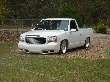
the deal is a buddy of mine built a 2-link for his 98 chevy full size and its crap! so im going to rebuild it for him, ive built plenty of 4-links but not a 2. so i think i know where im going with this thing.
darkstar06
+1y
with the 2-link the panhard bar pulles the axle over alot, would a wish bone be better, and will the wish bone work the same turnd eather way[ ??
whynotfab
+1y
if you're planning on doing the work needed to add a wishbone, id suggest just scrapping the 2link and making new lower bars as well that pivot on the axle for a nice wishbone 3link.. would definitely be better, and even if it costs a little more you wouldnt regret it down the road.
Related Discussions in Air Ride Suspensions
Thread
Posts
Last Post

